Letters from Ancient Greece and Rome
22 volumes of ancient Greek and Roman correspondence, why Seneca still hits home, and crossing 8,600 letters on Paper Lanterns.
By Bhuvan
Four minutes
Hello, readers.
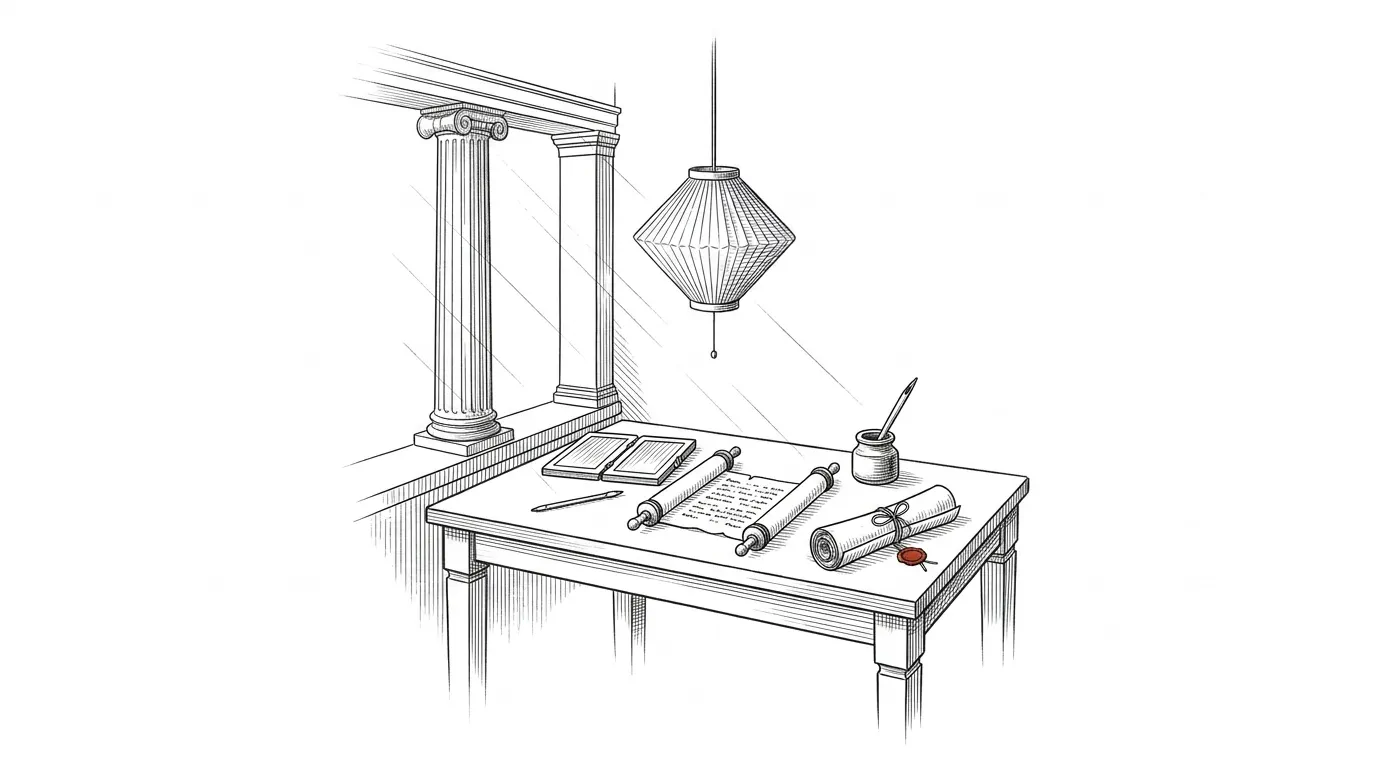
Gemini just helped me finish extracting text from a massive batch of ancient Greek and Roman letters—22 volumes in all, totaling 2,458 letters—and honestly, it’s a little shocking how good these models have become.
This batch of letters was made possible thanks to the generous donation of credits by the awesome and wonderful Prayag.
Like I mentioned in the introductory post, in the first year of Paper Lanterns being around, I had digitized about four collections of letters. Right now, in the last month alone, I’ve been able to digitize 74 collections of letters, totaling 8,603 letters (over 8,700 if you count the individual curated ones). That’s ridiculous.
Just as a disclosure: the extraction and assembly are not perfect. There are still issues here and there—low single-digit error rates when it comes to extraction, assembly, segmenting letters, and so on. Considering I’m doing all of this solo, that’s an acceptable rate of error for me. As I wrote in the introductory blog post, the idea is also to build a community of people around this and hopefully clean these up together over time (you can read more on how these letters are read). And in the meanwhile, I continue to use these tools to look for errors and keep cleaning things up myself. In the last few days alone, all the existing collections have gone through multiple iterations of reviews and fixes, and I’ll continue doing that.
Why these old Greek and Roman dudes?
While Greek and Roman philosophy is probably a little over-indexed in modern discourse, it has stuck around for a reason: these letters still contain timeless truths and real wisdom. What draws me to a lot of the ancient philosophers in particular is that their philosophy wasn’t meant to stay abstract—it is deeply practical and relevant to everyday life.
Among them, perhaps the one philosopher I greatly admire is Seneca.
The first time I came across Seneca’s letters was completely by accident. I don’t recall how, exactly, except that I stumbled across his letters on Wikisource, and it instantly struck me how good they were—so much so that I downloaded all of those letters from Wikisource and built a standalone site called seneca.ink just to make it easy for people to read them. That site is still around.
And then, just yesterday, these tools helped me digitize all three volumes of his Moral Letters to Lucilius—124 letters in total across Volume I, Volume II, and Volume III—so now you can read them on Paper Lanterns alongside the original page scans as well. If you read these letters, what immediately strikes you is just how practical and simple his advice is, and yet how profound—and hard—it is to actually follow:
Hold every hour in your grasp. Lay hold of to-day’s task, and you will not need to depend so much upon to-morrow’s. While we are postponing, life speeds by. Nothing, Lucilius, is ours, except time.
Truth be told, I haven’t read the letters of Cicero (Vol. I, II, III, IV), Pliny (Vol. I, II), or the other ancient Greek and Roman writers in this batch yet—including Plato (Thirteen Epistles), Horace (Epistles and Ars Poetica), Ovid (Tristia; Ex Ponto), Marcus Aurelius and Fronto (Vol. I, II), Alciphron (Letters from the Country and the Town), Porphyry (Letter to His Wife, Marcella), Julian (Letters), Synesius (Letters), Augustine (Vol. I, II), and Sidonius (Vol. I, II), plus a bonus detour into ancient Mesopotamia with Hammurabi’s royal letters. Now that I’ve managed to digitize them, I want to start reading them myself.
In the meanwhile, please enjoy these collections of some of the oldest surviving letters in our history—and as always, there are all the other collections of letters on the shelf for you to explore. I hope you have fun reading them, and I hope you get something out of them.
Thank you so much for landing on Paper Lanterns. I hope these squiggly lines on this digital piece of paper can become a small little lantern in your own mind.